The go2CMO Sales System
One connected system for turning home buyer interest into sales opportunities.
We connect the website, buyer qualification, CRM, automation, analytics, and sales process behind your business, then add other sources of home buyer demand, like ModelTown, when they make sense.
Buyer inquiries
Your Sales System
- Website
- Qualification
- CRM
- Automation
Analytics measures the system
ModelTown Exposure
Additional marketplace demand
Sales-ready opportunities
What you get
The system behind your home buyer journey.
The Sales System connects the core functions required to capture demand, understand buyer fit, manage opportunities, maintain follow-up, and give your team visibility into what is working.
Website + Lead Capture
Turn home buyer interest into action.
Create clear conversion paths that move visitors from browsing into the sales process.
Buyer Qualification
Understand who is raising their hand.
Capture the information needed to understand buyer fit, needs, timing, and next steps.
CRM
Manage every opportunity in one place.
Give the team a consistent view of buyer activity, status, ownership, and sales progress.
Automation
Keep follow-up moving.
Create consistent communication and next steps without relying entirely on manual follow-up.
Sales Process
Give every opportunity a defined path.
Establish clear stages for moving qualified home buyers from inquiry toward a sales decision.
Measurement layer
Analytics: see what creates qualified demand.
Measures the entire system: demand sources, conversion, pipeline movement, and where opportunities advance or stall.
Typical engagement
Know what to expect before we start.
Every Sales System is scoped around what you already have and what needs to be connected, improved, or built. Most engagements fall within these typical expectations.
Typical launch timeline
About 3 weeks
From defined scope to connected system launch.
Typical implementation investment
$6,500
Design, configuration, connection, testing, and launch.
Typical ongoing operation
$500/month
Ongoing operation, monitoring, optimization, and support.
Final scope, investment, and launch timing depend on what is already in place and are confirmed before work begins.
The system in practice
See how we've applied the system.
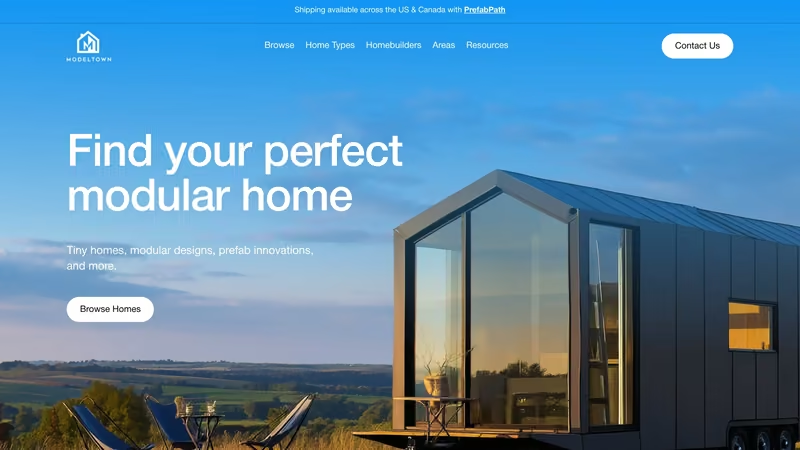
Prefab home marketplace
ModelTown
A marketplace where tiny, modular, prefab, and container home buyers compare builders across the US and Canada.
Buyers shopping for a small or factory-built home have dozens of builders to compare and no easy way to do it. Builders need buyers who are ready, not browsing. go2CMO operates ModelTown, including its Webflow site, builder listings, buyer inquiry flow, and a show lot in Fort Collins, Colorado.
View case study →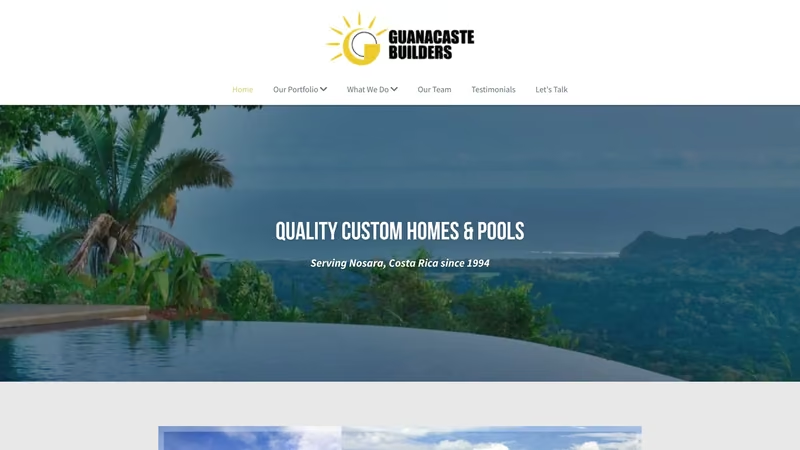
Custom home builder
Guanacaste Builders
Turning remote, six-figure home buyers into scheduled conversations.
A custom home and pool builder in Nosara, Costa Rica, since 1994. Most buyers live abroad and research for months before they talk to anyone, so the site has to earn trust and capture serious interest long before the first call.
Visit website ↗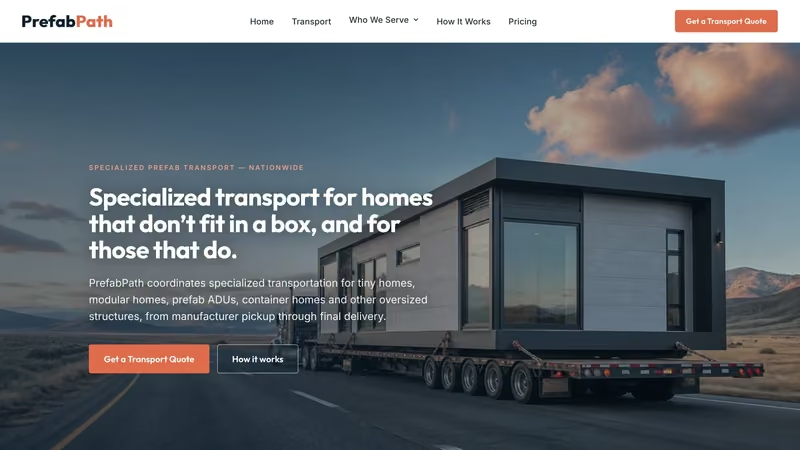
Prefab home transport
PrefabPath
Turning prefab home transport questions into quote requests.
PrefabPath coordinates specialized transportation for tiny homes, modular homes, prefab ADUs, and container homes, from manufacturer pickup through final delivery. go2CMO operates PrefabPath alongside ModelTown.
Visit website ↗
From interest to opportunity
A clear path from first contact to sales follow-up.
Captured
Home buyer interest enters the system.
Website forms and connected demand sources create a new inquiry.
Qualified
The system gathers the context sales needs.
Relevant buyer information helps determine fit, readiness, and appropriate next steps.
Routed + Followed Up
The opportunity moves to the right process.
Ownership, automation, and follow-up keep the inquiry moving.
Managed
Sales can see what happens next.
Every qualified opportunity has a stage, status, and next action.
Qualification + visibility
Turn inquiries into opportunities you can understand and manage.
The Sales System gives your team better context about each home buyer while also showing where demand comes from and what happens after the inquiry enters the pipeline.
Buyer qualification
Give sales context before the conversation starts.
Buyer intent
What are they interested in?
Project context
What are they trying to buy or build?
Location
Where is the project?
Timing and readiness
Where are they in the buying process?
The exact questions are defined for each business.
Pipeline visibility
Know where demand comes from and what happens next.
Source visibility
Where inquiries originate.
Conversion visibility
Which paths create qualified opportunities.
Pipeline visibility
Where opportunities are in the sales process.
Process visibility
Where follow-up or progression stalls.
Built around the business
Keep what works. Connect or replace what doesn't.
We evaluate the website, CRM, automation, analytics, and sales process already in place, then determine what should be retained, improved, connected, or replaced. The system is defined by the business functions it needs to perform, not by a required software brand.
- Keep
- Connect
- Improve
- Replace
Additional demand
Add another source of home buyer demand.
Your website generates demand through your own marketing. ModelTown can add another source by putting your models in front of home buyers already shopping for prefab, modular, and tiny homes. Both sources feed the same Sales System.
- Your WebsiteOwned demandSearch, referrals, campaigns, and direct traffic
- ModelTownMarketplace exposureReach home buyers already shopping
Result
Two demand sources feeding one connected sales pipeline.
Implementation
A defined path from current state to connected system.
Define
Map the current process and requirements.
Understand the existing website, lead sources, sales workflow, systems, gaps, and goals.
Build
Create and configure the required system components.
Implement the agreed lead capture, qualification, CRM, automation, analytics, and sales process changes.
Connect + Test
Make the system work as one journey.
Connect the components and verify lead flow, routing, automation, data capture, and sales handoff.
Launch + Operate
Put the system into use and improve it over time.
Launch the connected process and transition into the agreed ongoing operating model.
Typical launch: About 3 weeks
Timing varies based on existing systems, integrations, website scope, and required foundational work.
Typical engagement investment
A defined system with scope matched to what you actually need.
System implementation
Typical investment
$6,500
Implementation turns the agreed scope into a working, connected system.
What it covers
- Design and configuration of the agreed lead capture, qualification, CRM, automation, and sales process components
- Connection of your website, CRM, and demand sources into one pipeline
- Testing of lead flow, routing, automation, data capture, and sales handoff
- Launch of the connected process, with documentation and a recorded handoff for your team
Ongoing system operation
Typical monthly investment
$500/month
Operation keeps the system running and improving after launch.
What it covers
- Operation of the connected system within the agreed scope
- Monitoring of lead flow, routing, and data quality
- Optimization based on source, conversion, and pipeline data
- Support for your team as the sales process evolves
Final scope, investment, and launch timing are confirmed before work begins.
Investment varies based on your existing website, CRM, integrations, and how much of the system is already in place.
System operation starts with a six-month initial commitment, then continues month to month. Software subscriptions are billed to your own accounts, so the system and its data stay yours.
FAQ
Questions about the Sales System
Do we need to replace our current website?
Not necessarily. The Sales System starts by evaluating your current website alongside your lead sources, CRM, and sales process. If the website can capture and qualify home buyer interest, it stays and is connected to the rest of the system. If it can't, rebuilding it becomes part of the agreed scope.
Do we need to replace our CRM?
Not necessarily. If your current CRM can hold qualification details, track opportunity stages, and support automated follow-up, the Sales System is built around it. If it can't, a replacement is recommended and included in the scope before work begins.
Can you work with systems we already have?
Often, yes. The Sales System is defined by the functions it needs to perform: lead capture, buyer qualification, CRM, automation, analytics, and sales process. During the Define stage, each existing tool is assessed against its function and is retained, improved, connected, or replaced. Which tools stay is confirmed in the scope.
Does every Sales System include ModelTown?
Every go2CMO client gets a standard ModelTown listing, so marketplace inquiries can feed the same Sales System as inquiries from your own website. ModelTown is an additional source of home buyer demand. The Sales System also works with the demand sources you already have.
What determines implementation cost?
Implementation cost depends on what is already in place and how much needs to be built: website scope, CRM setup, integrations, qualification and automation requirements, and any foundational brand work. A typical Sales System implementation is $6,500, with ongoing operation typically $500 per month. Final scope and investment are confirmed before work begins.
What determines launch timing?
Launch timing depends on what is already in place, the integrations required, website scope, the amount of foundational work needed, and how quickly content and account access are available. A typical Sales System launches in about three weeks. Timing is confirmed with the scope before work begins.
Start a conversation
Plan the Sales System your business needs.
Tell us what you already have, where home buyer demand comes from today, and where the process breaks down. We’ll help define the connected system needed to capture, qualify, manage, and convert more of that demand.
Plan Your Growth System